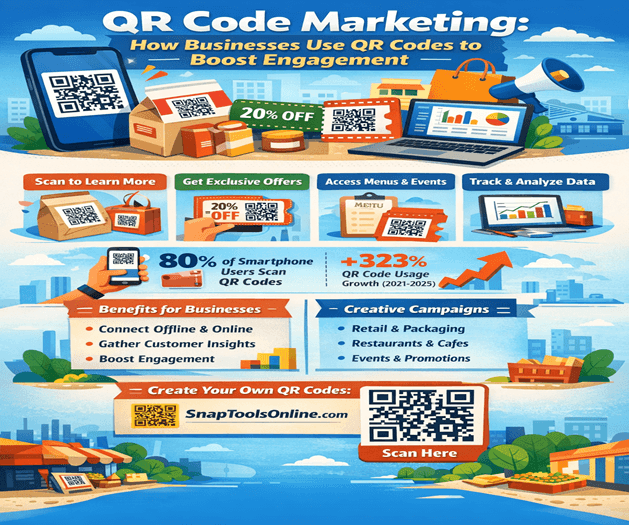
QR Code Marketing: How Businesses Use QR Codes to Boost Engagement
What Is QR Code Marketing?
QR Code Marketing: How Businesses Use QR Codes to Boost Engagement
What Is QR Code Marketing?
QR code marketing has quickly evolved into one of the most effective tools for connecting offline and digital marketing channels. A QR code (Quick Response code) is a type of two-dimensional barcode that users can scan using their smartphone camera to access digital content instantly. In marketing, businesses place QR codes on physical materials such as packaging, posters, product labels, or advertisements to drive customers toward online experiences like websites, promotions, or product videos.
Think of QR codes as a digital shortcut between the real world and the internet. Instead of typing long URLs or searching for information, customers simply scan a code and instantly reach the desired destination. This convenience is exactly why QR codes have become such a powerful marketing tool in the modern digital economy.
QR code marketing works particularly well because it matches how people behave today. Consumers are constantly using their smartphones to explore products, compare prices, and interact with brands. When a QR code appears in front of them—on a flyer, a menu, or even a product package—it invites curiosity. With one quick scan, a brand can provide deeper content, exclusive offers, or personalized experiences.
Businesses are increasingly embracing this technology because it is affordable, scalable, and measurable. Unlike traditional advertising that often struggles to track engagement, QR codes allow marketers to monitor how many people scanned the code, where they scanned it, and what actions they took afterward. This combination of simplicity and analytics has turned QR codes into a critical part of modern marketing strategies.
How QR Codes Work in Marketing
In practical terms, QR codes function as a bridge between offline and digital experiences. When someone scans a code, their device reads the encoded information—usually a URL—and opens it automatically in a browser or app. This simple action allows businesses to guide customers toward landing pages, product demos, discount offers, or social media profiles.
From a marketing perspective, this process creates a seamless interaction. A poster in a shop window can lead directly to a promotional campaign. A product label can open a tutorial video. Even business cards can contain QR codes that instantly save contact information. According to marketing research, QR codes can trigger actions like visiting websites, downloading files, sending messages, or opening maps with just a single scan.
This level of convenience dramatically reduces friction in the customer journey. Instead of requiring multiple steps—like searching online or typing a web address—the brand delivers the experience immediately. As a result, the likelihood of engagement increases significantly. The easier you make it for someone to interact with your brand, the more likely they are to take action.
Why QR Code Marketing Is Growing Rapidly
Over the past few years, QR code adoption has exploded worldwide. What was once considered a niche technology is now a mainstream marketing tool used by businesses of every size—from local restaurants to global corporations.
The main reason behind this growth is simple: smartphones and digital lifestyles. With billions of people carrying internet-connected devices in their pockets, QR codes provide a quick and frictionless way to connect the physical world with digital experiences. Consumers no longer need special scanning apps either; modern smartphone cameras can scan QR codes instantly.
Key QR Code Usage Statistics
Recent data shows how rapidly QR codes are becoming part of everyday marketing. For example:
|
QR Code Marketing Statistics |
Data |
|
Global QR code users by 2025 |
2.9 billion people |
|
Smartphone users scanning QR codes |
80% |
|
Growth of QR usage (2021–2025) |
+323% |
|
Marketers using QR codes in campaigns |
Over 90% |
These numbers illustrate just how widespread the technology has become. In fact, QR code scans across multiple countries increased by 57% globally, with continued growth expected in coming years.
Another interesting insight is how frequently consumers interact with QR codes. Surveys show that nearly 59% of users scan QR codes daily, while many others scan them at least weekly. This level of engagement makes QR codes one of the most accessible tools for connecting brands with customers.
Why Consumers Prefer QR Codes
Consumers appreciate QR codes primarily because they are fast and effortless. Imagine seeing a product advertisement that promises more information, but requires you to type a long web address. Most people simply won’t bother. A QR code solves that problem instantly.
Another reason for their popularity is that QR codes deliver immediate value. When users scan a code, they usually receive something useful—such as a discount coupon, a product tutorial, or access to exclusive content. This exchange of value encourages users to interact with brands more frequently.
From a psychological standpoint, QR codes also tap into human curiosity. The simple question “What happens if I scan this?” can drive engagement. When businesses design campaigns that reward that curiosity, the results can be impressive. Studies show that customers who frequently use QR-based services report high satisfaction levels, with nearly 89% expressing positive experiences.
Benefits of QR Code Marketing for Businesses
QR code marketing provides a wide range of advantages for companies trying to improve customer engagement and digital visibility. Unlike many traditional marketing tools, QR codes are both cost-effective and highly measurable, making them particularly attractive for businesses with limited budgets.
One of the biggest benefits is the ability to connect offline and online channels seamlessly. Traditional marketing materials—like brochures, posters, packaging, and product labels—usually exist in isolation from digital marketing efforts. QR codes transform these physical assets into interactive entry points that lead customers directly into the digital ecosystem.
Connecting Offline and Online Marketing
QR codes act like digital portals embedded within physical marketing materials. For example, a poster on the street might lead to a promotional video or a special landing page. A product package might link to detailed instructions or a product demonstration. In this way, businesses can convert offline impressions into measurable online engagement.
This connection is particularly powerful for retail environments. Imagine browsing in a store and seeing a QR code next to a product. With a quick scan, customers can read reviews, watch product demonstrations, or compare different models. The entire buying decision becomes easier and faster.
Businesses also benefit from the flexibility of QR codes. Unlike printed text or URLs, dynamic QR codes can be updated without reprinting the physical material. This means a single code can point to different campaigns over time, allowing marketers to adapt quickly without wasting resources.
Data Tracking and Customer Insights
Another major advantage of QR code marketing is its ability to provide detailed analytics. When someone scans a QR code, the system can track various data points such as scan location, time, device type, and engagement actions.
This information helps marketers understand customer behavior more effectively. For instance, a company might discover that most scans happen during specific hours of the day or in particular locations. With these insights, businesses can refine their campaigns and improve targeting.
Modern QR marketing platforms even allow companies to personalize experiences. For example, a QR code on a product might display different content depending on the user’s location or device type. These personalized experiences create deeper engagement and help brands build stronger relationships with their audiences.
Common Ways Businesses Use QR Codes
QR codes are incredibly versatile, which is why they appear in so many industries. From retail stores to restaurants and events, businesses are constantly discovering new ways to incorporate them into their marketing strategies.
Product Packaging and Retail Marketing
One of the most common uses of QR codes is on product packaging. Brands often print QR codes directly on boxes, labels, or instruction manuals to provide additional information about the product. When scanned, these codes can lead to tutorial videos, warranty registration pages, or product reviews.
For example, beauty and cosmetics brands frequently use QR codes to show makeup tutorials or skincare routines. In one campaign, a beauty brand placed QR codes inside taxis that linked to product videos and online stores, resulting in a significant increase in app downloads.
This approach transforms packaging from a static information source into an interactive marketing channel. Customers can learn more about the product, engage with the brand, and even make additional purchases directly from the content they access.
Restaurant and Menu Marketing
Restaurants were among the earliest adopters of QR code technology, particularly during the pandemic when contactless menus became essential. Today, QR codes are widely used for digital menus, online ordering, loyalty programs, and customer feedback forms.
Instead of printing physical menus that require frequent updates, restaurants simply place QR codes on tables. Customers scan the code to access the menu on their phones, which reduces costs and improves convenience. Restaurants can also update the menu instantly without reprinting anything.
Beyond menus, QR codes allow restaurants to collect reviews, offer discounts, and encourage social media sharing. These interactions help restaurants build stronger relationships with customers while gathering valuable feedback.
Event Marketing and Ticketing
Events and conferences also rely heavily on QR codes. Tickets, event passes, and promotional materials often include QR codes that provide instant access to event schedules, speaker information, or networking platforms.
For organizers, QR codes simplify the check-in process. Instead of manually verifying tickets, staff can scan codes quickly to confirm entry. This reduces waiting times and improves the overall event experience.
At the same time, QR codes enable deeper engagement. Event sponsors can place codes around the venue that lead to promotional offers, contests, or exclusive content. These interactions keep attendees engaged throughout the event while generating measurable marketing data.
Creative QR Code Campaign Examples
Many major brands have demonstrated how creative QR code campaigns can dramatically increase engagement. Successful campaigns often combine curiosity, value, and interactive experiences to encourage users to scan.
Global Brand Campaigns
Large brands frequently use QR codes in innovative ways to capture attention. Companies like Coca-Cola, Burger King, and Adidas have all launched campaigns where scanning a QR code unlocks special rewards or personalized content.
One famous example involved a fast-food chain offering a free burger to customers who downloaded its app through a QR code promotion. The campaign spread rapidly across social media and drove significant app adoption.
These campaigns work because they deliver clear value. When consumers know that scanning a QR code might unlock a discount, exclusive content, or a surprise reward, they are much more likely to engage.
Small Business QR Code Marketing Ideas
Small businesses can also benefit from QR codes without needing large budgets. For example, local shops often place QR codes on receipts or packaging that link to review pages or loyalty programs.
Other creative ideas include QR codes on storefront windows, business cards, flyers, and product tags. A coffee shop might place a code near the counter that leads to a loyalty program, while a real estate agent might include QR codes on property signs linking to virtual tours.
Because QR codes are inexpensive and easy to create, they offer small businesses a powerful tool for competing with larger brands in the digital marketing space.
How to Create an Effective QR Code Marketing Strategy
To maximize results, businesses must approach QR code marketing strategically. Simply placing a code somewhere and hoping people will scan it rarely works. Successful campaigns are designed around clear goals, strong incentives, and user-friendly experiences.
Best Practices for QR Code Placement
QR codes should always be placed in locations where scanning is convenient. For example, codes on posters should be large enough to scan from a distance, while codes on product packaging should be positioned where customers can easily see them.
It’s also important to include a call-to-action near the QR code. Instead of displaying the code alone, marketers should add a short message such as “Scan for a 20% discount” or “Watch the product demo.” This simple instruction dramatically increases scan rates because users understand what they will gain.
Design Tips for Higher Scan Rates
Design also plays a major role in QR code effectiveness. Codes should maintain strong contrast and avoid visual clutter to ensure reliable scanning. At the same time, businesses can customize QR codes with colors, logos, and branding elements to make them visually appealing.
Testing is another critical step. Before launching a campaign, companies should test the QR code across multiple devices and lighting conditions to ensure smooth functionality. A QR code that fails to scan easily can frustrate users and damage the campaign’s effectiveness.
Tools to Generate QR Codes
Businesses can create QR codes using a variety of online tools and platforms. Many services allow users to generate both static and dynamic QR codes, track analytics, and customize designs.
Online QR Code Generators
If you're looking for easy tools to generate QR codes, several free utilities are available online. Platforms like SnapToolsOnline provide quick tools for creating and managing QR codes without complex software.
Some useful QR-related tools include:
These tools make it simple for marketers, bloggers, and businesses to generate QR codes for promotions, websites, or product campaigns.
Future Trends in QR Code Marketing
The future of QR code marketing is evolving rapidly as technology continues to advance. New innovations are transforming QR codes from simple links into personalized and interactive marketing tools.
Personalized QR Experiences
One of the biggest trends is personalization. Brands are increasingly using QR codes to deliver customized experiences based on user preferences or behavior. For example, scanning a code might reveal a personalized discount or product recommendation tailored to the user’s interests.
Another trend is the integration of QR codes with augmented reality, artificial intelligence, and interactive storytelling. These technologies allow brands to create immersive experiences that go far beyond traditional marketing.
As digital marketing becomes more data-driven, QR codes will likely play an even bigger role in bridging the gap between physical and digital customer journeys.
Conclusion
QR code marketing has become one of the most powerful tools for connecting physical experiences with digital engagement. By enabling instant access to websites, promotions, and interactive content, QR codes make it easier than ever for businesses to interact with customers in real time.
Their popularity continues to grow because they are simple, affordable, and highly effective. Businesses can use them across product packaging, advertising campaigns, restaurants, events, and countless other marketing channels. With billions of users worldwide and increasing adoption among marketers, QR codes are no longer just a trend—they are a core part of modern digital marketing.
Companies that use QR codes strategically can improve customer engagement, gather valuable data insights, and create memorable brand experiences. As technology evolves and personalization becomes more advanced, QR code marketing will continue to expand, offering even more creative opportunities for businesses to connect with their audiences.
FAQs
1. What is QR code marketing?
QR code marketing is a strategy where businesses use QR codes to connect physical materials—like posters or packaging—to digital content such as websites, promotions, or videos.
2. Are QR codes effective for marketing?
Yes. QR codes allow businesses to track engagement, drive traffic, and connect offline marketing with digital experiences, making them highly effective tools.
3. Where can businesses place QR codes?
QR codes can appear on product packaging, restaurant menus, posters, flyers, event tickets, advertisements, and even business cards.
4. Do QR codes improve customer engagement?
Yes. Because scanning a QR code is quick and easy, it encourages customers to interact with brands and access additional information instantly.
5. How can I create a QR code for my business?
You can use online tools like SnapToolsOnline or other QR code generators to create custom codes for websites, promotions, and marketing campaigns.